Why Budgeting Alone Fails in Gambling Recovery (and What Actually Works)

You Aren't The Problem
For many people working through gambling recovery, budgeting feels like it should be the solution. On paper, it makes sense. Track your income, list your expenses, and follow the plan. But many individuals find that even with a clear budget, the same patterns continue. Money disappears and confidence takes another hit.
The issue is not lack of knowledge. Most people already understand how budgeting works. The real challenge is access to money during emotional moments and the speed at which decisions are made. In those moments, a budget sitting on paper or in an app does not create enough friction to stop the behavior.
This is where traditional budgeting falls short.
Why Budgeting Alone Doesn’t Work
When people sit in front of me the first thing they often say is, “I’ve tried budgeting but it doesn't work!”
Budgeting assumes that people will consistently make rational decisions. It is built on the idea that awareness leads to behavior change. But gambling recovery does not operate in a purely rational space. Emotions, triggers, and habits play a major role in financial behavior.
Stress, boredom, loneliness, excitement, and even overconfidence can all become triggers. When those emotions rise, decision making often shifts from thoughtful to reactive. In that moment, the presence of a budget does not slow anything down.
Research supports this disconnect. Studies show that problem gambling weakens the relationship between a person’s attitudes about gambling and how often they engage in it. In other words, even when someone knows better, behavior does not always follow (Caudwell et al., 2025).
This explains why someone can create a detailed budget in the morning and still struggle later that same day. The issue is not discipline. It is exposure and accessibility.
When money is easily available, the opportunity to gamble remains constant.
The Hidden Problem: Speed and Access
One of the most overlooked issues in gambling recovery is how quickly money can be accessed.
With debit cards, credit cards, mobile apps, and instant transfers, there is almost no delay between the urge to gamble and the ability to act on it. That lack of delay removes the opportunity to pause, think, or redirect behavior. Think of this as a barrier or brick wall preventing you from entering a danger zone!
This is especially important because urges are often temporary. If someone can create even a small delay between the impulse and the action, the likelihood of making a different choice should increase.
Traditional budgeting does not address this. It tells you what you should do with your money, but it does not change how easily you can access it in the moment.
That gap is where many people struggle.
What Actually Works: Building Financial Guardrails Alongside Your Budget
Instead of relying on willpower alone, individuals in recovery benefit more from systems that reduce access, create structure, and introduce intentional friction into financial decisions. Remember that barrier or brick wall we discussed earlier? That is referred to as a guardrail.
These systems act as guardrails. They do not remove freedom, but they guide behavior in a way that supports long term goals.
One of the most effective strategies is automation.
When essential bills such as rent, utilities, insurance, and minimum debt payments are paid automatically, the risk of those funds being used elsewhere is reduced. This ensures that the most important obligations are handled first, without requiring repeated decision making.
Automation creates consistency. It also reduces mental load. Instead of constantly deciding what to pay for and when, those decisions are made once and carried out automatically.
Another helpful approach is separating money into different accounts.
Rather than keeping all funds in one place, dividing money by purpose creates clarity and control. For example, one account can be used for bills, another for daily spending, and another for savings.
This structure does something important. It limits exposure.
If only a set amount of money is available in a spending account, then that is the only amount that can be used. The rest is protected. This creates a natural boundary that supports better decision making without requiring constant self-control.
Using Tools That Support Recovery
In addition to automation and account separation, certain financial tools can provide an added layer of protection.
Some debit card programs are designed with controls that block transactions at gambling related merchants. These tools serve as an external safeguard during moments when internal control feels difficult.
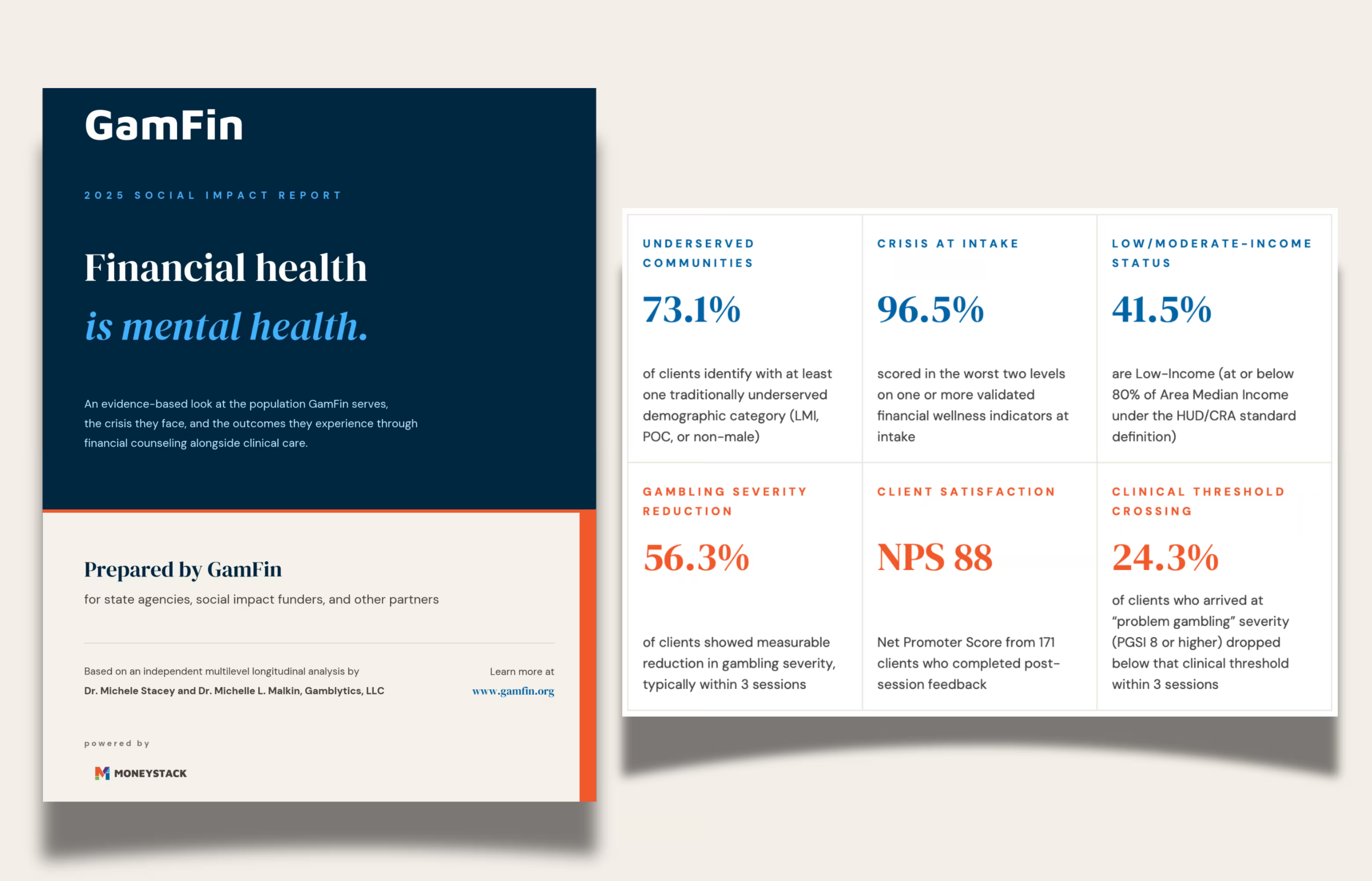
GamFin’s referral to Link Financial is one example of a resource that introduces this type of structure. It helps create a barrier between impulse and action by limiting where money can be spent.
These tools are not restricted. They are about support.
They create space between the urge and the ability to act on it. And that space is powerful. Even a few extra minutes can be enough to shift a decision.
For many individuals, this is the difference between staying on track and starting over.
Shifting the Focus: From Willpower to Systems
One of the most important mindsets shifts in gambling recovery is understanding that success does not come from trying harder. It comes from setting up an environment that makes success more likely.
When people rely only on willpower, they are putting themselves in a position where they have to win the same battle repeatedly. That is exhausting, and it is not sustainable.
Systems change that dynamic.
Instead of asking, “Why can’t I stick to my budget?” a more helpful question becomes, “What system can I put in place, so I do not have to rely on willpower in that moment?”
This shift removes shame and replaces it with strategy.
It also builds confidence. Each time a system works, whether it is an automatic bill being paid or a blocked transaction, it reinforces progress.
A Practical Starting Point
For someone beginning this process, the goal is not to do everything at once. It is to start with a few key changes that create immediate support.
Start by identifying essential expenses and setting up automatic payments where possible. This ensures that housing, utilities, and other necessities are covered first.
Next, separate income into designated accounts. Even starting with two accounts, one for bills and one for spending, can make a noticeable difference.
Then, explore tools that can help limit access to gambling platforms or high-risk transactions. This adds a layer of protection during vulnerable moments.
It is also helpful to create a simple spending plan rather than a highly detailed budget. The goal is clarity, not perfection. Knowing how much is available for spending each week can be more effective than tracking every dollar.
Finally, build in accountability where possible. This could include working with a financial counselor, sharing goals with a trusted person, or using tools that provide spending alerts.
These steps may seem small, but together they create a system that supports long term stability.
Rebuilding Trust with Money
One of the hardest parts of gambling recovery is rebuilding trust, not just with others, but with yourself.
Repeated financial setbacks can make it feel like progress is impossible. But when systems are put in place, something begins to change.
Bills get paid on time. Spending becomes more predictable. Savings, even if small at first, begin to grow.
These moments matter.
They create evidence that change is happening. Over time, that evidence builds confidence. And confidence makes it easier to keep going.
Moving Forward with Confidence
Budgeting is still an important tool, but it works best when it is paired with systems that reflect real life behavior. Recovery is not about perfection. It is about creating a financial environment that supports better decisions over time.
With the right structure in place, individuals can begin to reduce financial stress, regain a sense of control, and move forward with greater confidence.
Change does not happen overnight. But with the right support systems, it does happen.
And more importantly, it lasts.
Reference
Caudwell, K. M., Casanova, A. F., & Flack, M. (2025). How does problem gambling impact the relationship between gambling attitudes and frequency? Journal of Gambling Studies, 41(3), 1163–1174. https://doi.org/10.1007/s10899-025-10379-x
%20(1).avif)
.png)