The GamFin 20-Minute Money Reset: Small Steps, Big Financial Change

The GamFin 20-Minute Money Reset: Small Steps, Big Financial Change
By, Lynn McHann
How to Do a 20-Minute Weekly Money Reset
When finances feel overwhelming, many people do the exact opposite of what would help most. They avoid looking at their finances entirely.
Maybe the bank account feels stressful. Maybe there’s guilt attached to spending. Maybe bills piled up during a difficult season. Or maybe every money decision feels emotionally exhausting right now.
The good news? Financial recovery does not require perfection. It requires reconnection.
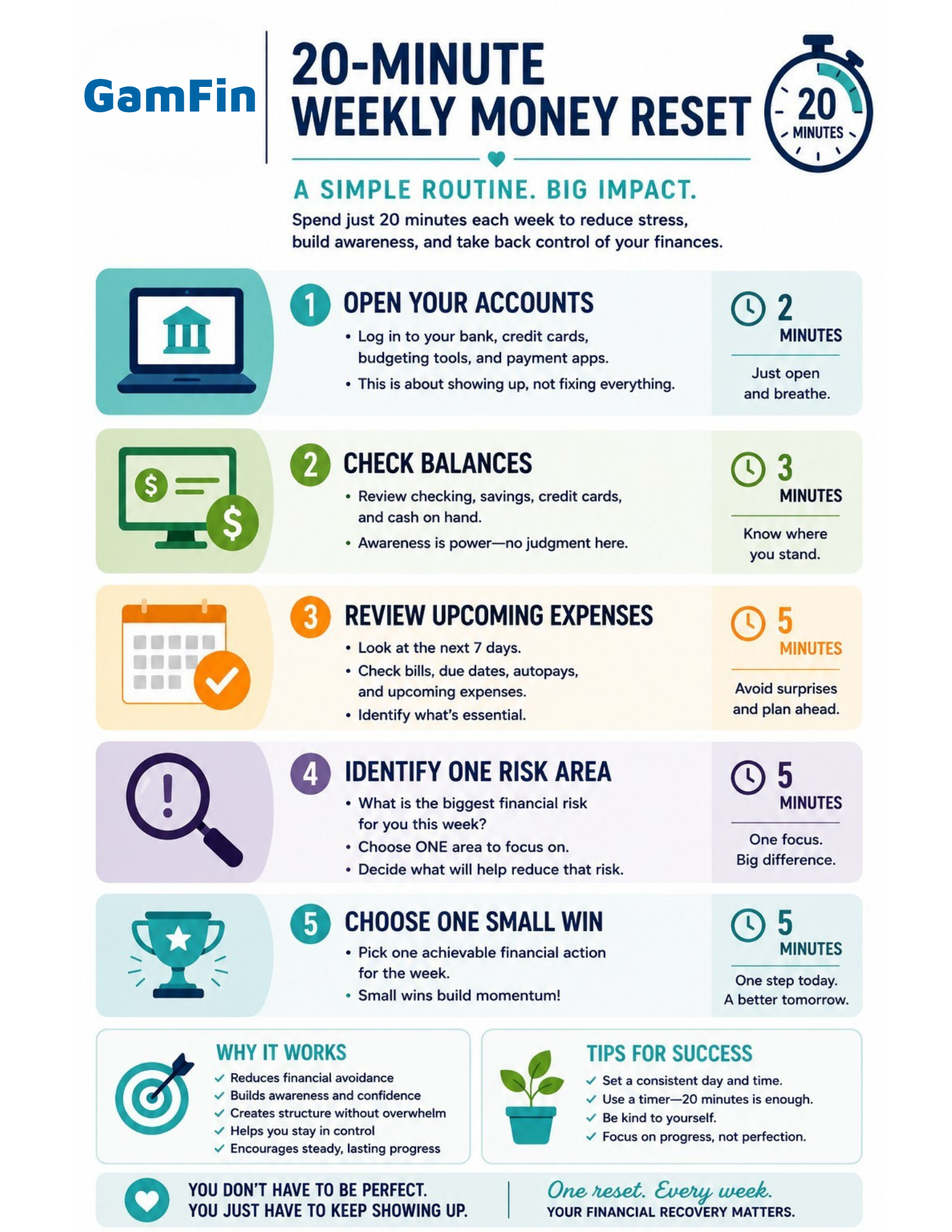
A weekly "Money Reset" is a simple 20-minute routine designed to help you stay aware of your finances without getting buried in them. Think of it less like a budget meeting and more like a weekly check-in with yourself.
The goal is not to "fix everything." The goal is to reduce avoidance and build consistency.
Here's how to do it.
Step 1: Open Your Accounts (2 Minutes)
Start by opening the financial accounts you use most often:
- Bank accounts
- Credit cards
- Payment apps
- Budgeting tools
- Bill reminders
That's it.
No judgment. No panic. No trying to solve everything immediately.
For many people, simply logging in is the hardest part. If that's true for you, you are not alone. Financial stress often triggers avoidance because the brain wants to escape discomfort.
Showing up anyway is progress.
Helpful tip:
Try pairing your Money Reset with something calming — coffee or tea, music, a blanket, sitting outside. You are building a routine, not punishing yourself.
Set a 20-minute timer so you know there's an end point. This isn't open-ended — it's contained. When the timer goes off, you're done.
Step 2: Check Balances (3 Minutes)
Next, look at your current balances.
Check:
- Checking account
- Savings account
- Credit card balances
- Cash on hand
The purpose here is awareness, not shame.
Avoid saying things like:
- "I'm terrible with money."
- "I always mess this up."
- "What's wrong with me?"
Instead try:
- "This is where things stand today."
- "I can work with this."
- "Awareness helps me make better decisions."
Financial recovery gets harder when numbers stay hidden.
Step 3: Review Upcoming Expenses (5 Minutes)
Now look ahead at the next 7 days.
Ask yourself:
- What bills are coming up?
- Is anything on autopay?
- Are there subscriptions I forgot about?
- Are there large expenses coming?
- Will my account cover everything?
Write down:
- Due dates
- Amounts
- Anything that feels stressful or uncertain
This step reduces surprises — and surprises are often what trigger financial panic or impulsive decisions.
Pro tip:
If possible, create a simple "must pay first" list:
- Housing
- Utilities
- Transportation
- Food
- Recovery or healthcare needs
Not every bill carries the same urgency.
Step 4: Identify One Risk Area (5 Minutes)
This is where the Money Reset becomes powerful.
Ask:
"What is the biggest financial risk for me this week?"
Examples might include:
- Emotional spending
- Gambling urges
- Avoiding a creditor call
- Overspending on food delivery
- Using credit cards to cope with stress
- Forgetting a payment
- Lending money you can't afford to lose
Choose just ONE area.
Not ten. Not your entire financial history. Just one thing to stay aware of this week.
Then ask:
"What would help me reduce that risk?"
Examples:
- Turning off saved payment methods
- Avoiding certain apps
- Using cash instead of cards
- Asking someone to hold you accountable
- Setting spending alerts
- Planning meals ahead of time
Small changes matter more than dramatic promises.
Step 5: Choose One Small Financial Win (5 Minutes)
End your Money Reset with one achievable action for the week ahead.
The keyword is:
Achievable.
Examples:
- Save $20
- Call one creditor
- Cook meals at home three nights
- Review one credit card statement
- Cancel one subscription
- Avoid one gambling trigger
- Put gas money aside early
- Spend 10 minutes organizing bills
Small wins build momentum. Momentum builds confidence. Confidence builds change.
Financial recovery is rarely one giant breakthrough. More often, it's dozens of small decisions repeated consistently.
Why the Weekly Money Reset Works
Many people believe financial improvement starts with discipline.
In reality, it often starts with reducing avoidance.
The Weekly Money Reset works because it:
- Creates structure without overwhelm
- Builds awareness gradually
- Reduces financial surprises
- Encourages consistent habits
- Helps separate facts from fear
- Creates small, repeatable wins
Most importantly: It helps you reconnect with your finances in a safer, calmer way.
If you share finances with a partner, this can also be something you do together — but only when you're both ready. There's no pressure to make it a joint exercise right away.
You do not need to become a "perfect" money person overnight.
You just need a system that helps you keep showing up.
Twenty minutes at a time.
Missed a week? That's fine. This isn't a streak to protect — it's a habit to return to. Just do the next one.
Need help building your financial reset plan? GamFin counselors can walk you through it. Schedule your free session today.